
Selecting the right gasket for flange connections is critical to ensure safe, leak-free, and long-lasting operation in industrial systems. Spiral Wound Gaskets are widely used in high-pressure, high-temperature, and chemically demanding environments because of their unique structure and resilience. At Ningbo Kaxite Sealing Materials Co., Ltd., our focus is on producing Spiral Wound Gaskets that deliver reliable performance and durability for a variety of industrial applications.
In this article, we will explore how to select Spiral Wound Gaskets effectively, taking into account flange conditions, operating parameters, product specifications, and manufacturing quality. Our factory experience demonstrates that careful evaluation at every step can significantly extend service life and reduce maintenance costs.
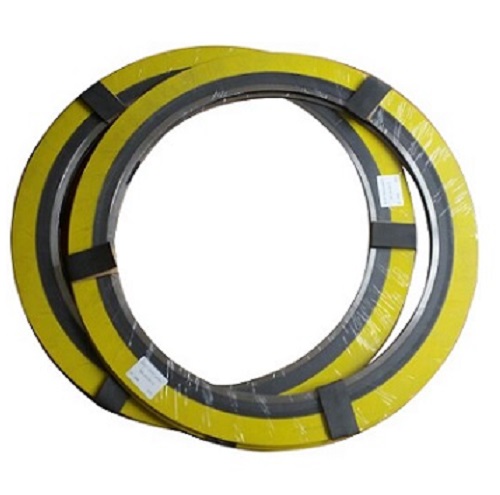
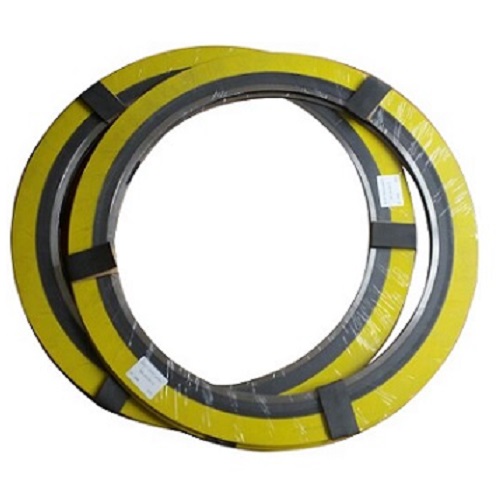
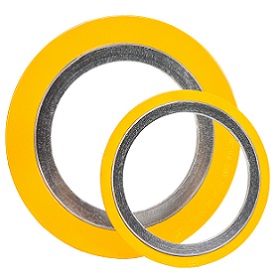
Spiral Wound Gaskets are a type of semi-metallic sealing solution widely used in industrial flange connections. They are specifically designed to handle high pressures, extreme temperatures, and chemically aggressive media. At Ningbo Kaxite Sealing Materials Co., Ltd., our Spiral Wound Gaskets are manufactured with precision, ensuring reliable sealing and long-term performance across various industrial applications.
The core structure of a Spiral Wound Gasket consists of alternating layers of a metal strip and a soft filler material. The metal strip, often stainless steel or alloy steel, provides mechanical strength and resilience. The filler material, typically flexible graphite, PTFE, or ceramic fiber, ensures adaptability and sealing capability. This combination creates a gasket that can recover after compression, tolerate flange irregularities, and resist chemical attack.
Our Spiral Wound Gaskets from Ningbo Kaxite Sealing Materials Co., Ltd. are used across multiple industries due to their reliability and versatility. Common applications include:
Understanding the composition of Spiral Wound Gaskets is essential for selecting the right product for a specific flange connection. Below is a detailed breakdown of the structure and common materials we use at our factory:
| Component | Material Options | Function |
| Metal Winding | Stainless Steel 304/316, Carbon Steel, Alloy Steel | Provides mechanical strength, resilience, and recovery capability |
| Filler Material | Flexible Graphite, PTFE, Ceramic Fiber | Ensures sealing, chemical resistance, and flexibility |
| Outer Ring (Optional) | Carbon Steel, Stainless Steel | Maintains gasket shape, prevents over-compression, and provides alignment |
| Inner Ring (Optional) | Stainless Steel, Alloy Steel | Prevents inward extrusion of the filler and adds stability in high-pressure applications |
When choosing a Spiral Wound Gasket, consider the following critical factors to ensure long-term performance:
At Ningbo Kaxite Sealing Materials Co., Ltd., our Spiral Wound Gaskets are available in multiple configurations to meet diverse industry requirements:
| Model | Metal Winding | Filler Material | Temperature Range | Pressure Class |
| SWG-SS304-GR | Stainless Steel 304 | Flexible Graphite | -50 to 550°C | Class 150-600 |
| SWG-SS316-PTFE | Stainless Steel 316 | PTFE | -100 to 260°C | Class 150-300 |
| SWG-C45-CF | Carbon Steel | Ceramic Fiber | -50 to 750°C | Class 150-900 |
| SWG-SS316-GR | Stainless Steel 316 | Flexible Graphite | -50 to 600°C | Class 150-600 |
In conclusion, understanding the structure, advantages, applications, and material options of Spiral Wound Gaskets is essential for proper selection. With careful evaluation and professional guidance from our factory, engineers can ensure safe, leak-free flange connections that maintain performance over time.
Effective gasket selection requires evaluation of both the flange conditions and the product parameters. At Ningbo Kaxite Sealing Materials Co., Ltd., our factory has developed a structured approach based on years of field experience and testing.
Key parameters of Spiral Wound Gaskets impact their long-term reliability:
| Model | Metal Winding | Filler Material | Temperature Range | Pressure Class |
| SWG-SS304-GR | Stainless Steel 304 | Flexible Graphite | -50 to 550°C | Class 150-600 |
| SWG-SS316-PTFE | Stainless Steel 316 | PTFE | -100 to 260°C | Class 150-300 |
| SWG-C45-CF | Carbon Steel | Ceramic Fiber | -50 to 750°C | Class 150-900 |
Manufacturing quality plays a crucial role in determining the reliability and longevity of Spiral Wound Gaskets. At Ningbo Kaxite Sealing Materials Co., Ltd., our factory focuses on precise control of every production step to ensure optimal performance.
Selecting the right Spiral Wound Gaskets requires a combined assessment of flange conditions, operating parameters, product specifications, and manufacturing quality. At Ningbo Kaxite Sealing Materials Co., Ltd., our factory emphasizes precision, high-quality materials, and strict inspection to deliver reliable, long-lasting gaskets. By aligning flange conditions with properly manufactured gaskets, our clients achieve leak-free operation, minimized downtime, and reduced maintenance costs. Contact our team today to receive professional recommendations and ensure optimal gasket selection for your applications.
Q1: How do I know if a Spiral Wound Gasket is suitable for high-pressure applications?
A1: Verify the gasket's metal winding strength and filler material. Our Spiral Wound Gaskets are rated for various pressure classes, and our factory can provide guidance based on your specific flange pressure and operating conditions.
Q2: Can Spiral Wound Gaskets withstand chemical corrosion?
A2: Yes. By selecting corrosion-resistant alloys and compatible filler materials such as PTFE, our gaskets can reliably seal flanges exposed to aggressive chemical media.
Q3: How do manufacturing standards affect gasket performance?
A3: High manufacturing quality ensures consistent layer winding, proper filler density, and accurate dimensions, all of which maintain sealing stress under thermal and pressure cycles, preventing leaks over time.
Q4: How should I choose gasket thickness and width?
A4: Gasket dimensions must match flange specifications to avoid over-compression or under-sealing. Our factory provides technical charts and consultation to select precise dimensions.
Q5: Why choose Ningbo Kaxite Sealing Materials Co., Ltd. for Spiral Wound Gaskets?
A5: Our factory combines over two decades of experience, strict quality control, and material expertise to produce Spiral Wound Gaskets that meet international standards, ensuring long-term reliability and leak-free flange connections.