Spiral Wound Gaskets are critical components in industrial sealing applications, and the choice of materials directly impacts their durability, performance, and reliability. At Ningbo Kaxite Sealing Materials Co., Ltd., our team specializes in designing high-quality Spiral Wound Gaskets that meet diverse industrial requirements. In this article, we will explore the common materials used, their advantages, and how our factory ensures long-term performance.
Table of Contents
What Materials Are Commonly Used in Spiral Wound Gaskets?
Spiral Wound Gaskets are engineered with precision to provide reliable sealing in high-pressure, high-temperature, and chemically aggressive environments. Selecting the right materials is crucial, as it determines the gasket’s lifespan, efficiency, and safety performance. At Ningbo Kaxite Sealing Materials Co., Ltd., our team leverages decades of experience to design Spiral Wound Gaskets that meet rigorous industrial standards. In this section, we explore the common materials used in our products, their properties, and why they are preferred in specific applications.
1. Metal Components and Their Advantages
The metal component forms the structural backbone of a Spiral Wound Gasket. The choice of metal affects mechanical strength, corrosion resistance, and thermal endurance.
-
Stainless Steel (304, 316, 321): Stainless steel is highly resistant to corrosion, oxidation, and chemical attack. Our Spiral Wound Gaskets with 316 stainless steel perform reliably in chemical, petrochemical, and marine environments.
-
Carbon Steel: Carbon steel is used for moderate temperature and pressure applications. It provides economic benefits while maintaining mechanical integrity in our factory’s designs.
-
Inconel and Monel: Nickel-based alloys like Inconel and Monel excel in high-temperature or highly corrosive applications. Our Spiral Wound Gaskets using these metals endure extreme operating conditions without deformation.
-
Alloyed Steel: Alloyed steels combine the benefits of carbon steel with added elements for improved tensile strength and corrosion resistance, ideal for demanding industrial pipelines.
2. Filler Materials and Their Importance
Fillers are crucial for compressibility, chemical resistance, and leak prevention. Our factory carefully selects filler materials to match the metal component, ensuring long-term performance.
-
Flexible Graphite: Offers excellent high-temperature stability and chemical resistance. Graphite fillers in our Spiral Wound Gaskets can withstand pressures up to 40 MPa.
-
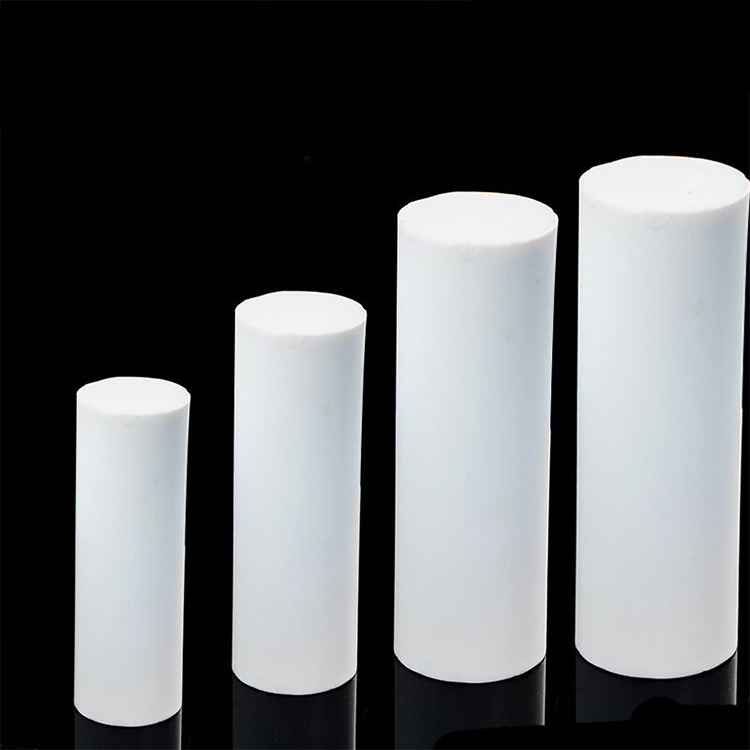
PTFE (Polytetrafluoroethylene): Chemically inert and resistant to most aggressive media, PTFE maintains flexibility at low and moderate temperatures, ensuring leak-proof performance.
-
Aramid Fibers: Provide moderate temperature tolerance, high strength, and flexibility. Our gaskets with aramid fillers are ideal for applications where both durability and cost-efficiency are required.
-
Mineral Fillers: Such as mica or ceramic powders, used for enhancing thermal stability and supporting structural integrity in specific gasket designs.
3. Composite Layering Structures
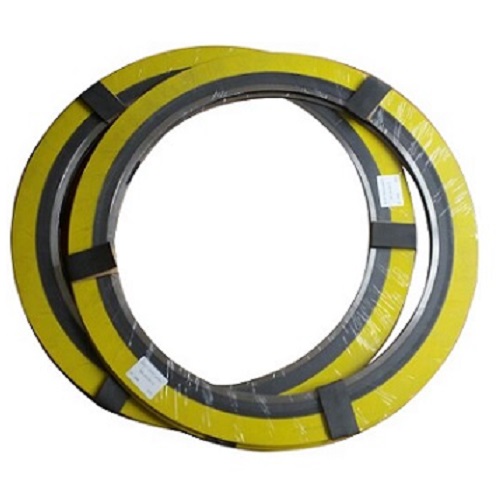
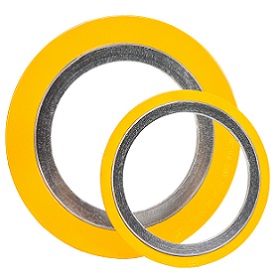
Most high-quality Spiral Wound Gaskets feature alternating metal and filler layers. This structure balances compressibility, strength, and chemical resistance.
-
Metal layers provide rigidity and pressure resistance.
-
Filler layers absorb flange irregularities to prevent leakage.
-
Combined layers adapt to thermal expansion and contraction.
-
Our Spiral Wound Gaskets are precision-wound to maintain consistent density and thickness.
4. Comparative Properties of Common Materials
|
Material
|
Temperature Range
|
Pressure Range
|
Chemical Resistance
|
Typical Applications
|
|
Stainless Steel 316 + Graphite
|
-200 to 550°C
|
up to 40 MPa
|
High
|
Chemical Processing, Petrochemical
|
|
Carbon Steel + PTFE
|
-50 to 250°C
|
up to 20 MPa
|
Moderate
|
Water, Food, Pharmaceutical
|
|
Inconel + Graphite
|
-200 to 650°C
|
up to 60 MPa
|
Very High
|
Refinery, High-temperature Steam
|
|
Stainless Steel 304 + Aramid
|
-50 to 400°C
|
up to 25 MPa
|
Moderate
|
General Industrial, HVAC
|
|
Alloy Steel + Mineral Filler
|
-50 to 500°C
|
up to 50 MPa
|
High
|
Power Plants, Heavy Industry
|
5. Summary of Material Selection Benefits
-
High mechanical strength ensures gasket stability under pressure.
-
Corrosion-resistant metals prolong gasket life in aggressive environments.
-
Fillers like graphite and PTFE prevent leakage and adapt to flange imperfections.
-
Layered structures provide flexibility, compressibility, and long-term durability.
-
Our Spiral Wound Gaskets are designed to match specific operational parameters, ensuring optimal performance for each application.
At Kaxite Sealing, our team carefully evaluates each project to select the most suitable metal and filler combinations. This guarantees that our Spiral Wound Gaskets maintain reliability, resist corrosion, and perform consistently across a wide range of industrial scenarios. By understanding the role of each material, our customers benefit from gaskets that reduce downtime, maintenance costs, and operational risk.
Why Do These Materials Matter in Industrial Applications?
The materials used in Spiral Wound Gaskets affect the reliability, efficiency, and safety of industrial equipment. At Ningbo Kaxite Sealing Materials Co., Ltd., our selection process considers temperature, pressure, chemical exposure, and flange conditions.
1. Temperature Resistance
-
Graphite and Inconel withstand extreme heat without losing sealing integrity.
-
PTFE maintains flexibility in low-temperature environments.
-
Our factory tests each Spiral Wound Gasket to ensure stable performance under continuous temperature cycling.
2. Pressure Endurance
-
Metal layers provide structural strength to resist high-pressure systems.
-
Proper filler compression prevents blowout in pressurized pipelines.
-
We use advanced winding techniques to maintain uniform stress distribution across the gasket.
3. Corrosion and Chemical Compatibility
-
Stainless steel and nickel alloys resist corrosive fluids and gases.
-
Graphite and PTFE fillers offer chemical resistance to acids, alkalis, and solvents.
-
Our Spiral Wound Gaskets are customized based on chemical analysis of the operating media.
4. Long-Term Durability
-
Layered construction absorbs flange irregularities, minimizing leakage over time.
-
High-quality materials prevent aging and degradation, extending maintenance intervals.
-
Our products are tested for thousands of operational cycles to ensure longevity.
How Our Factory Ensures Quality in Spiral Wound Gaskets
At Ningbo Kaxite Sealing Materials Co., Ltd., our factory applies stringent quality control measures to deliver Spiral Wound Gaskets that meet international standards.
1. Material Selection and Inspection
-
All metals undergo chemical composition analysis to verify corrosion resistance.
-
Fillers are tested for compressibility, chemical resistance, and thermal stability.
-
Our team selects materials tailored to the specific requirements of our customers.
2. Precision Winding Technology
-
Spiral winding ensures uniform density across the gasket.
-
Controlled tension prevents deformation and ensures optimal sealing.
-
Our Spiral Wound Gaskets achieve consistent thickness for reliable performance.
3. Post-Production Testing
-
Leakage tests simulate real-world conditions for pressure and temperature.
-
Dimensional inspection guarantees compliance with flange standards.
-
Our factory records performance data for traceability and quality assurance.
4. Customization and Consultation
-
We provide engineering consultation to select the right metal and filler combination.
-
Custom gaskets are manufactured according to unique flange sizes and operational conditions.
-
Our team ensures each Spiral Wound Gasket is optimized for both safety and longevity.
Conclusion
Choosing the right materials for Spiral Wound Gaskets is essential for operational safety, durability, and performance. At Ningbo Kaxite Sealing Materials Co., Ltd., our commitment to high-quality metals, advanced filler materials, and precision manufacturing ensures that our gaskets meet the most demanding industrial standards. By integrating stainless steel, graphite, PTFE, and other premium materials, our Spiral Wound Gaskets offer reliable sealing and long-term performance for a variety of applications. Contact us today to discover how our products can optimize your sealing solutions and reduce maintenance costs.
FAQ
Q1; What materials are best for high-temperature Spiral Wound Gaskets?
Graphite combined with stainless steel or Inconel is ideal for high-temperature applications, providing excellent thermal stability and chemical resistance.
Q2: How does PTFE filler improve chemical resistance in Spiral Wound Gaskets?
PTFE is chemically inert and resists acids, alkalis, and solvents, ensuring long-term sealing without degradation in corrosive environments.
Q3: Why is stainless steel commonly used in our Spiral Wound Gaskets?
Stainless steel provides structural strength, corrosion resistance, and durability, making it suitable for a wide range of industrial applications.
Q4: Can Spiral Wound Gaskets handle high-pressure systems?
Yes, the metal layers in Spiral Wound Gaskets provide high-pressure endurance, while the fillers ensure tight sealing and prevent blowout.
Q5: How does our factory ensure consistent quality in Spiral Wound Gaskets?
Our factory employs material inspection, precision winding, post-production testing, and customization to ensure each gasket meets international standards and customer requirements.