
Selecting the correct sealing material for demanding industrial environments is critical to prevent leaks, reduce downtime, and ensure operational safety. Among the myriad of options, Expanded PTFE Sheet and Tape have emerged as the gold standard for chemical resistance, temperature stability, and conformability. But with varying densities, grades, and dimensions available, how does an engineer or procurement specialist make the right choice? In our two decades of manufacturing experience, we have seen countless failures caused by mismatched material specifications. Our factory has dedicated extensive research to understanding the nuances of expanded polytetrafluoroethylene, and we are here to share that knowledge. This guide will walk you through every technical parameter, application scenario, and selection criterion so you can confidently source the ideal Expanded PTFE Sheet and Tape for your piping, vessel, or heat exchanger sealing needs.
At Ningbo Kaxite Sealing Materials Co., Ltd., we believe that the right seal starts with the right foundation. Our Expanded PTFE Sheet and Tape are engineered to deliver superior creep relaxation and excellent torque retention, outperforming conventional PTFE products. Whether you are dealing with aggressive acids, high-temperature steam, or ultra-low temperature cryogens, understanding material properties like density, recovery, and chemical compatibility will transform your sealing reliability. In this comprehensive resource, we will explain why our manufacturing processes lead to consistent microstructures, and how you can apply these insights to your specific flange conditions. From low-stress applications to extreme bolt loads, let us help you navigate the critical factors that define success in industrial sealing.
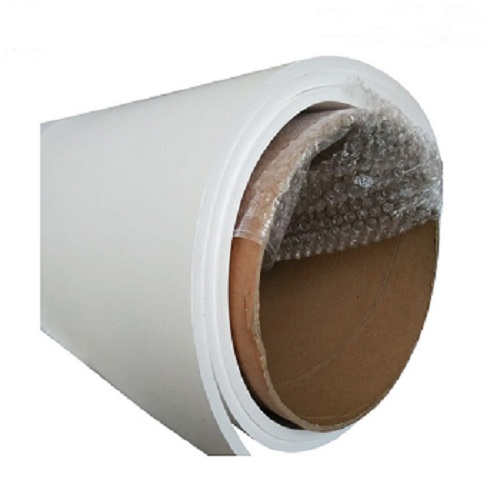
Understanding the fundamental properties of Expanded PTFE Sheet and Tape is the first step toward a reliable seal. Unlike standard PTFE, expanded PTFE undergoes a unique manufacturing process that creates a microfibrillar structure. This structure provides enhanced flexibility and creep resistance while maintaining chemical inertness. In our factory, we produce these materials under strict controls to ensure consistent pore distribution and tensile strength. Below we list the essential properties that every engineer must evaluate before selecting a sealing product.
In our experience, these properties directly translate to field performance. For instance, a chemical plant processing chlorinated solvents once used skived PTFE that failed due to cold flow. After switching to our Expanded PTFE Sheet and Tape with optimized density, the leak-free service life increased by 300%. Therefore, always request property data sheets and validate that the values align with your flange design and operating conditions. Our factory provides full traceability for each batch, ensuring that the material you receive matches the certified parameters.
Density is arguably the most critical factor when selecting Expanded PTFE Sheet and Tape for industrial sealing. Many buyers overlook this parameter, leading to premature gasket failure. The expanded PTFE microstructure changes dramatically with density: lower density yields higher conformability but lower pressure resistance, while higher density provides superior blowout resistance but requires higher bolt loads. At Ningbo Kaxite Sealing Materials Co., Ltd., we manufacture three distinct density grades to match different service conditions. Let us break down why density controls sealing behavior.
Our factory utilizes advanced calendering and expansion lines to achieve uniform density across the entire sheet width. Non-uniform density leads to localized stress points and leakage. When you request quotes, always ask for the density tolerance (typically ±0.05 g/cm³). Additionally, consider that thicker sheets (3mm) often require lower density to maintain compressibility, while thin tapes (0.5mm) can be higher density for gasket cutting. We have helped thousands of maintenance engineers reduce inventory by selecting the right density grade for 80% of their flange connections. For critical services, we offer custom density profiles. Remember, the wrong density can cause either extrusion (if too low density) or flange damage (if too high density with excessive bolt torque).
Chemical compatibility and thermal stability are non-negotiable for industrial sealing. While pure PTFE is chemically inert, some lower-quality Expanded PTFE Sheet and Tape may contain fillers or processing residues that degrade in harsh environments. At Kaxite, our virgin-grade expanded PTFE contains no fillers, plasticizers, or recycled materials. This guarantees resistance to aggressive chemicals like oleum, hydrogen peroxide, and methylene chloride. Below we present a detailed compatibility table and thermal selection guide based on our laboratory tests and field reports.
| Chemical Environment | Compatibility with Virgin Expanded PTFE | Recommended Density Grade | Max Temperature (°C) |
| Sulfuric Acid (98%) | Excellent | High density (1.5 g/cm³) | 200 |
| Hydrochloric Acid (37%) | Excellent | Medium or High density | 150 |
| Sodium Hydroxide (50%) | Excellent | Low or Medium density | 120 |
| Chlorine Gas (wet or dry) | Excellent | High density (minimize permeation) | 200 |
| Steam (saturated) | Good (avoid low density due to thermal cycling) | Medium density | 200 |
| Aromatic Hydrocarbons (Toluene) | Excellent | Any density | 260 |
For thermal cycling conditions, our factory recommends medium or high density Expanded PTFE Sheet and Tape because low density may experience accelerated creep under fluctuating temperatures. Always verify the maximum continuous operating temperature with the manufacturer. Our products have been tested for 500 thermal cycles from -40°C to 200°C without significant degradation. Additionally, consider the pressure-temperature (P-T) rating: as temperature increases, the maximum allowable pressure decreases. We provide detailed P-T curves for each product grade. If your process involves rapid temperature changes (thermal shock), choose a thicker gauge (2.0mm or 3.0mm) to accommodate flange movement. One of our clients in a pharmaceutical plant reduced annual leakage incidents by 85% after switching to our chemically matched Expanded PTFE Sheet and Tape with proper thermal rating.
Even the best material chemistry fails if dimensional parameters are incorrect. When purchasing Expanded PTFE Sheet and Tape, thickness uniformity, width tolerance, and sheet flatness directly impact gasket cutting efficiency and sealing contact stress. Our factory uses laser micrometers and automated gauging systems to ensure each roll meets ISO 3302-1 standards. Below we list the critical dimensional checks every buyer must perform, along with typical specifications from Kaxite.
When cutting gaskets from sheets, thickness variation can cause uneven compression. Our factory provides precision-slit tapes that guarantee consistent cross-section. For critical applications like flange gaskets in nuclear plants, we recommend specifying a maximum thickness deviation of ±0.05mm. Additionally, consider that larger sheets (over 2000mm length) may require special handling to avoid warping. Our logistics team packs each Expanded PTFE Sheet and Tape in rigid cartons to preserve flatness. One common mistake is ignoring the effect of humidity on dimensional stability. Although PTFE has near-zero water absorption, long-term storage in high humidity can cause minor changes in rolled tape tension. Always store our products in a clean, dry environment below 35°C. For high-precision applications, we can supply certified dimension reports traceable to national standards.
In an industry flooded with counterfeit or substandard products, verifying quality certifications is your best defense against sealing failures. At Ningbo Kaxite Sealing Materials Co., Ltd., we are proud of our third-party certifications and rigorous internal testing. Genuine Expanded PTFE Sheet and Tape should always be accompanied by documentation that proves traceability, material purity, and performance testing. Below we explain the key certifications and tests to look for.
Additionally, request these test reports from your supplier: Density test (ASTM D792), Tensile strength (ASTM D638), Creep relaxation (ASTM F36), and Chemical immersion test (ASTM F146). Beware of suppliers offering "generic PTFE" that contains regrind or recycled PTFE. Such materials often have inferior microstructure and fail prematurely. In our factory, we only use virgin PTFE resin sourced from ISO 9001 certified producers. We also perform random blowout tests on each lot of Expanded PTFE Sheet and Tape to ensure pressure retention. For critical sealing applications, we recommend an independent laboratory verification on a sample. Remember, a small upfront cost in quality verification can save tens of thousands in unplanned downtime.
Choosing the right Expanded PTFE Sheet and Tape for industrial sealing is a systematic process that balances material properties, density, chemical compatibility, dimensional accuracy, and quality certifications. Throughout this guide, we have shared insights from our factory floor and field applications. Our commitment at Ningbo Kaxite Sealing Materials Co., Ltd. is to provide engineered sealing solutions that exceed industry standards. We recommend creating a checklist based on your operating parameters: maximum pressure, temperature extremes, fluid chemistry, flange condition, and bolt load availability. Then match these against our product specifications. For standard services, medium density 1.2 g/cm³ Expanded PTFE Sheet and Tape will cover most needs. For aggressive chemicals or high pressures, upgrade to high density virgin grade. Do not forget to request test certificates and dimensional inspection reports before finalizing your order.
Ready to improve your sealing reliability and reduce maintenance costs? Our team of sealing specialists is available to review your application data and recommend the optimal Expanded PTFE Sheet and Tape grade. Contact Ningbo Kaxite Sealing Materials Co., Ltd. today for free samples, technical datasheets, and customized cutting services. We offer fast lead times, OEM packaging, and global shipping. Let us help you achieve zero leakage in your next flange connection. Request a quote now and experience the difference of precision-engineered expanded PTFE.
Question 1: What is the main difference between standard PTFE sheet and Expanded PTFE Sheet and Tape for sealing?
Answer: Standard PTFE sheet is produced by skiving or molding, resulting in a non-porous, dense structure that is prone to cold flow and creep under load. Expanded PTFE Sheet and Tape undergo a unique expansion process that creates a microfibrillar, porous structure. This structure provides superior conformability to flange irregularities, better creep resistance, and excellent torque retention over time. Our factory’s expanded PTFE also maintains chemical inertness while offering lower density options for low-stress applications. For industrial sealing, expanded PTFE significantly reduces leak rates and extends gasket life compared to conventional PTFE.
Question 2: How do I select the correct thickness of Expanded PTFE Sheet and Tape for a damaged or corroded flange?
Answer: For flanges with deep scratches, pitting, or warpage, we recommend a thicker Expanded PTFE Sheet and Tape of at least 2.0mm to 3.0mm nominal thickness. The higher compressibility (40-60%) allows the material to fill voids up to 1.5mm deep. Our factory advises using low to medium density grades (0.9 to 1.2 g/cm³) for such applications because they conform better under low bolt load. For severely damaged flanges, consider using our specialized "conformable grade" Expanded PTFE Tape with a thickness of 3.0mm and density of 0.8 g/cm³. Always perform a flange surface inspection and consult our technical team to avoid over-compression that could lead to blowout.
Question 3: Can Expanded PTFE Sheet and Tape be used in oxygen service, and what precautions are needed?
Answer: Yes, but only with oxygen-compatible grades that are thoroughly cleaned and free from hydrocarbon contamination. Standard Expanded PTFE Sheet and Tape may contain processing residues that react violently with high-pressure oxygen. At Ningbo Kaxite Sealing Materials Co., Ltd., we offer oxygen service grades that meet ASTM G93 and CGA G-4.1 cleanliness standards. These products undergo ultrasonic cleaning and are individually packaged in oxygen-safe bags. Additionally, for oxygen service, choose high density (≥1.5 g/cm³) to reduce permeation and avoid any grease or oil during installation. Always consult your oxygen system safety engineer and never use standard PTFE products for oxygen applications without proper certification.
Question 4: How does the installation torque differ between low density and high density Expanded PTFE Sheet and Tape?
Answer: Low density Expanded PTFE Sheet and Tape require lower bolt torque because they compress easily. Typical gasket stress for low density (0.7 g/cm³) is 10-20 MPa. Medium density needs 20-35 MPa, while high density (1.5 g/cm³) may require 40-60 MPa to achieve proper seal. Our factory recommends using a torque wrench and following ASME PCC-1 guidelines. Over-torquing low density material can cause extrusion, while under-torquing high density leads to insufficient compression. For mixed flange assemblies, always use the higher density material to avoid relaxation issues. We provide detailed torque tables for each product grade upon request.
Question 5: What is the shelf life of Expanded PTFE Sheet and Tape, and how should it be stored?
Answer: When stored properly, Expanded PTFE Sheet and Tape have an indefinite shelf life because PTFE does not age or oxidize. However, our factory recommends using within 5 years to ensure optimal dimensional stability and surface cleanliness. Store rolls and sheets in original packaging away from direct sunlight, ozone sources, and temperatures above 40°C. Avoid stacking heavy objects on top of sheets to prevent permanent deformation. For tapes, keep them in a horizontal position to avoid stretching. Before installation, inspect for any dust or debris; cleaning with isopropyl alcohol is acceptable. Always check our batch label for manufacturing date, and rotate inventory using a first-in-first-out system.