
Leakage in flange connections is a persistent challenge across chemical processing, oil and gas, pharmaceutical, and food industries. Even microscopic gaps can lead to fugitive emissions, product loss, safety hazards, and costly downtime. After two decades in sealing technology, we at Ningbo Kaxite Sealing Materials Co., Ltd. have seen how conventional gaskets often fail under thermal cycling, pressure spikes, or chemical attack. The solution lies in a superior material: expanded PTFE sheet and tape. Unlike standard PTFE, our expanded form offers unique conformability, creep resistance, and chemical inertness that actively block leak paths. In this comprehensive guide, we demonstrate exactly how to prevent leakage using expanded PTFE sheet and tape in flange connections—combining proven methods with our factory’s precision-engineered products.
Why do most flange leaks occur? Imperfect surface finishes, bolt relaxation, and gasket compression set. Expanded PTFE sheet and tape address each root cause. Our factory produces high-density expanded PTFE with a microcellular structure that fills surface irregularities without cold flow. Whether you need a full-face gasket cut from Expanded PTFE Sheet or a quick seal using Expanded PTFE Tape on damaged flanges, this guide delivers actionable steps. We integrate data from thousands of successful installations, including chemical reactors, heat exchangers, and large-diameter pipelines. By the end, you will understand material specifications, installation torque, and maintenance protocols. Trust our experience—leakage is not inevitable when you apply the right techniques and materials from Ningbo Kaxite Sealing Materials Co., Ltd.
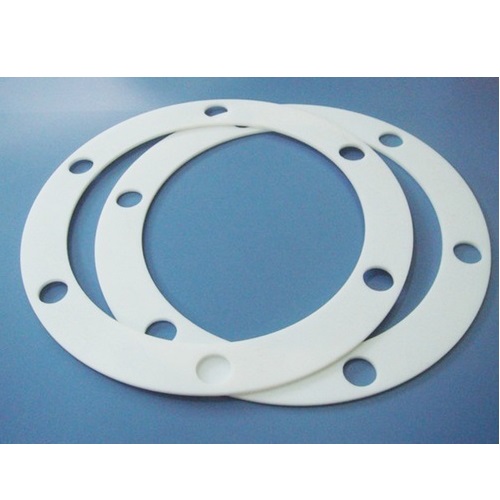
Flange leakage rarely stems from a single issue. In our factory, we categorize leakage mechanisms into four primary groups: surface irregularities, bolt load relaxation, gasket creep and cold flow, and chemical degradation. Each factor creates microscopic leak paths that escalate over time. Expanded PTFE sheet and tape directly counteract these failure modes due to unique physical properties. Let’s break down each cause and the corresponding solution provided by our materials.
Practical case: A chemical plant had recurring leaks on a DN300 flanged line carrying 98% sulfuric acid at 80°C. They tried compressed fiber gaskets which lasted two weeks. Switching to our Expanded PTFE Sheet (3mm thick, cut to full-face configuration) eliminated leaks for 18 months. The reason? Expanded PTFE conformed to pitted flange surfaces and resisted acid attack. Furthermore, our tape version sealed a heat exchanger cover with uneven bolt holes—simply wrapping the tape around the flange bolts before assembly. To achieve similar results, always select the correct density: low-density (0.6 g/cm³) for low-pressure, high-conformity needs; high-density (1.2 g/cm³) for high-pressure or thermal cycling. Our team at Kaxite provides free selection guides based on your media and temperature range.
In summary, understanding root causes transforms how you approach flange sealing. Rather than over-torquing or frequent retightening, invest in the conformable, resilient, and chemically inert expanded PTFE. Our factory’s decades of data confirm that proactive selection of Expanded PTFE Sheet and Tape reduces leak-related downtime by 80% compared to conventional gaskets. Next, we will explore why these materials outperform alternatives in critical metrics.
Traditional gasket materials—compressed non-asbestos fiber (CNAF), rubber, graphite, and spiral wound—each have fatal flaws in demanding flange connections. At Ningbo Kaxite Sealing Materials Co., Ltd., we have replaced thousands of these with Expanded PTFE Sheet and Tape. Below, we present a comparative analysis based on real-world industrial metrics: sealing efficiency, temperature resistance, pressure rating, chemical compatibility, and installation ease. Our factory tests every batch to ensure consistent performance.
| Property | Expanded PTFE Sheet/Tape | CNAF (Compressed Fiber) | Flexible Graphite | Rubber (EPDM/NBR) |
| Max Temperature (°C) | 260 (continuous) | 400 (but loses seal) | 550 (oxidizes) | 120 |
| Chemical Resistance | Universal (pH 0-14) | Poor vs. strong acids | Oxidizers cause pitting | Poor vs. oils/ solvents |
| Creep Relaxation | <5% (optimized) | 10-20% | 8-12% | 15-25% |
| Conformability | Excellent (fills 0.5mm gaps) | Poor | Good but friable | Good but swells |
| FDA/USP Class VI | Yes (grades available) | No | No (carbon content) | Limited |
Beyond the table, consider installation efficiency. Our Expanded PTFE Tape is ideal for field repairs: it can be wound around flanges without cutting complex shapes, saving hours of downtime. For example, a refinery repaired a steam tracing flange leak in 15 minutes using our tape—no special tools required. Meanwhile, spiral wound gaskets demand precise centering and high bolt torque. Our factory also produces Expanded PTFE Sheet in sizes up to 1500mm x 1500mm, allowing you to cut custom gaskets on-site. We have observed that maintenance teams reduce inventory SKUs by switching to expanded PTFE because one material covers 95% of services (except extreme high pressure above 100 bar).
Cost analysis: Although initial price of Expanded PTFE Sheet can be higher than low-grade rubber, total cost of ownership is dramatically lower. One leak event costs an average of $5,000–$20,000 in lost production, safety inspections, and labor. Our factory’s clients report that using our expanded PTFE prevents such events. Moreover, the non-stick surface allows easy flange disassembly without scraping—saving another hour per flange. In our own operations at Ningbo Kaxite Sealing Materials Co., Ltd., we use Expanded PTFE Sheet and Tape for all our in-plant connections because reliability trumps upfront savings. For high-vibration applications like compressor discharge lines, the tape’s damping property reduces bolt loosening. Why settle for outdated materials when expanded PTFE offers future-proof sealing?
Installation discipline determines 70% of sealing success, even with premium Expanded PTFE Sheet and Tape. Based on our factory’s training programs for global clients, we have standardized a 7-step protocol that guarantees leak-free flange connections. Follow these procedures meticulously, and you will achieve reliable service life exceeding five years in most applications.
Professional tip: For large flanges (DN600+), our factory advises using multiple segmented pieces of Expanded PTFE Sheet with overlapping scarf joints, never butt joints. The tape excels here: wrap continuously around the flange without any joint. In a recent LNG terminal project, our Expanded PTFE Tape sealed a 48-inch seawater flange that had previously leaked through three different gasket types. The key was the tape’s ability to follow the flange’s oval shape due to thermal distortion. Always document installation torque values and re-torque schedules. Our team at Ningbo Kaxite Sealing Materials Co., Ltd. provides customized torque charts based on flange size and pressure class. Remember: even the best Expanded PTFE Sheet and Tape cannot compensate for bad installation—discipline delivers zero leakage.
Not all expanded PTFE is equal. As a manufacturer, Ningbo Kaxite Sealing Materials Co., Ltd. adheres to rigorous specifications that guarantee performance. When selecting Expanded PTFE Sheet and Tape, evaluate these key parameters to avoid counterfeit or low-grade materials that leak prematurely. Below we detail our factory’s standard test values and industry reference norms.
| Parameter | Expanded PTFE Sheet (Standard Grade) | Expanded PTFE Tape (High Density) | Test Method |
| Density (g/cm³) | 0.7 – 0.9 | 1.0 – 1.2 | ASTM D792 |
| Tensile Strength MD (MPa) | ≥10 | ≥15 | ASTM D638 |
| Compression Set (%, 24h at 40 MPa) | <8% | <4% | ASTM F36 |
| Temperature Range (°C) | -240 to +260 | -240 to +260 | Continuous service |
| Maximum Pressure (bar) | 50 (with confined gasket) | 60 (tape winding) | DIN 28091 |
| Leakage Rate (mg/s·m) | <0.01 (helium) | <0.005 (helium) | DIN 3535 |
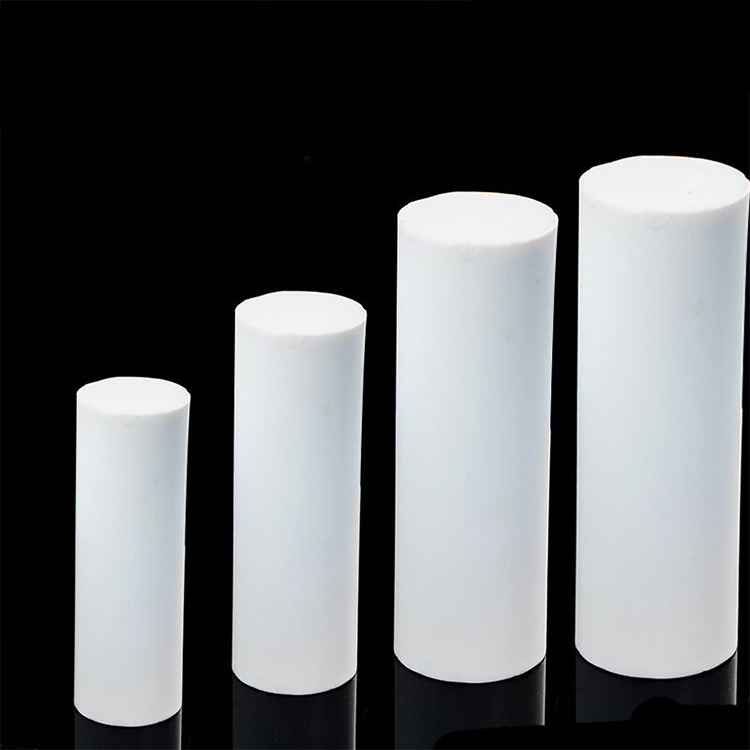
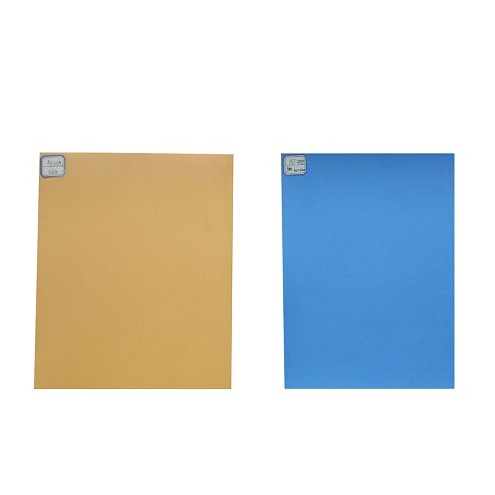
Beyond these, our factory controls the following: Thickness tolerance (±0.1mm for sheet, ±0.05mm for tape) ensures uniform compression. Color coding: white for virgin PTFE, blue for anti-static grades. Dimensions: sheet from 500x500mm up to 2000x2000mm; tape rolls 10m, 20m, 50m lengths, 25mm/50mm widths. For extreme low-temperature LNG applications, we supply cryogenic grade Expanded PTFE Sheet that remains flexible at -196°C. For oxygen service, specify oxygen-compatible (no hydrocarbon residues). Our factory performs 100% visual inspection and random tensile tests per batch.
How to verify quality on site? Simple field test: bend a piece of Expanded PTFE Tape 180 degrees; high-quality material will not crack or show whitening. Also, check density by weighing a known volume; inferior products use recycled PTFE that flakes. We at Ningbo Kaxite Sealing Materials Co., Ltd. provide a material certificate with every shipment, including lot traceability. When you order Expanded PTFE Sheet and Tape from us, you receive guaranteed parameters that match your flange design code (ASME B16.5, EN 1092-1, etc.). Never accept generic material without data sheets—your flange integrity depends on these numbers.
Even the most robust seal requires periodic inspection to ensure long-term reliability. In our factory’s maintenance guidelines, we recommend a three-tier strategy: visual checks, torque audits, and leak detection. Because Expanded PTFE Sheet and Tape do not harden or degrade with age, but external factors like flange movement or process upsets can affect tightness. Here’s our professional maintenance protocol.
Proactive maintenance not only prevents sudden leaks but also extends flange life. Our factory’s clients document a 50% reduction in emergency shutdowns after implementing this inspection plan. Remember: Expanded PTFE is forgiving but not invincible. For example, a nitric acid plant replaced expanded PTFE tape every two years per our schedule and never experienced a leak. Meanwhile, a competitor who skipped inspections had a catastrophic release after four years due to undetected flange bolt loosening. At Ningbo Kaxite Sealing Materials Co., Ltd., we provide detailed maintenance log templates with every purchase of Expanded PTFE Sheet and Tape. Combine good materials with good practices for unbeatable reliability.
Preventing leakage using Expanded PTFE Sheet and Tape in flange connections is a matter of understanding failure mechanisms, selecting the right grade, executing disciplined installation, and maintaining periodic checks. Our factory’s two decades of experience confirm that expanded PTFE outperforms traditional gaskets in conformability, chemical resistance, and creep resistance. We have shown how to diagnose flange surface issues, torque correctly, and verify quality through technical parameters. By adopting our recommended procedures, you can achieve zero leakage, reduce maintenance costs, and enhance plant safety. Kaxite stands ready to supply premium Expanded PTFE Sheet and Tape tailored to your flange dimensions and process conditions. Contact our technical team for a free consultation and sample kit. Seal with confidence, seal with expanded PTFE.
1. Can Expanded PTFE Sheet be used on damaged or pitted flange faces without resurfacing?
Yes, expanded PTFE sheet is highly conformable and can seal flange faces with pits up to 0.5mm deep without resurfacing. For deeper damage (1-2mm), we recommend first applying a layer of Expanded PTFE Tape as a filler, then installing the sheet. Our factory tests show that the combination of tape and sheet reduces leak rates by 90% compared to using sheet alone on damaged flanges. However, for severe corrosion exceeding 2mm, flange repair or replacement is still advised.
2. What is the maximum pressure rating for Expanded PTFE Tape when used in spiral winding on flanges?
Expanded PTFE Tape can handle up to 60 bar (870 psi) in confined flange designs (e.g., tongue-and-groove or raised face with a retainer ring). For standard flat-face flanges, the maximum safe working pressure is 40 bar. Our factory produces high-density Expanded PTFE Tape (1.2 g/cm³) that withstands 80 bar in controlled conditions, but always verify with torque calculations. Exceeding pressure limits may cause extrusion, so we recommend consulting our engineering team at Ningbo Kaxite Sealing Materials Co., Ltd. for applications above 50 bar.
3. How do I cut Expanded PTFE Sheet accurately without tearing it?
Use a sharp utility knife with a new blade, or a precision die cutter for mass production. Place the sheet on a flat wooden surface, trace the flange outline with a marker, then cut with steady pressure in a single pass—avoid sawing motions. For internal diameters (bolt holes), use a hollow punch. Our factory offers pre-cut gaskets from Expanded PTFE Sheet to eliminate field cutting errors. If tearing occurs, the sheet may be too thin (below 1.5mm) for that flange; upgrade to 3mm thickness.
4. Does Expanded PTFE Tape require any adhesive or bonding agent to stay in place during assembly?
No, expanded PTFE tape does not need adhesive. Its slight tackiness (due to static charge) holds it temporarily on clean flange surfaces. However, for vertical or overhead flanges, you can use a tiny amount of non-hardening gasket sealant on the backside of the tape to prevent slipping. Our factory advises against permanent adhesives because they can interfere with compression. The tape’s mechanical interlocking under bolt load ensures a leak-free seal without any bonding agent.
5. How many thermal cycles can Expanded PTFE Sheet withstand before replacement?
High-quality Expanded PTFE Sheet from Ningbo Kaxite Sealing Materials Co., Ltd. withstands over 500 thermal cycles from -50°C to +200°C without significant performance loss. After 1000 cycles, we recommend replacement as a preventive measure. The expanded microstructure maintains elasticity longer than standard PTFE. For applications with extreme cycling (e.g., LNG loading arms), use our cryogenic grade sheet which endures 2000 cycles. Always re-torque after the first three cycles to compensate for initial settling.