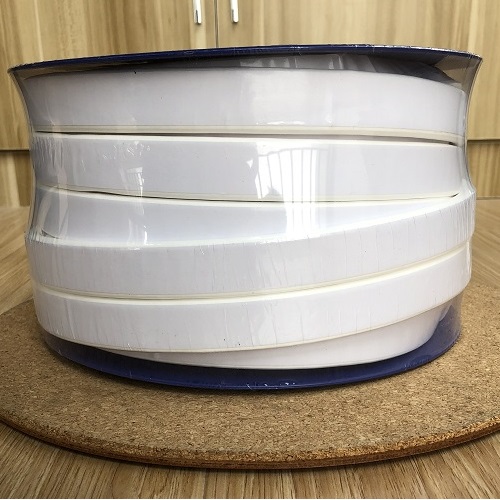

Selecting the correct sealing material for flanges is critical to prevent leaks, ensure safety, and prolong equipment life. Expanded PTFE Sheet and Tape have revolutionized industrial sealing due to their chemical resistance, conformability, and durability. But how do you match these versatile materials with various flange types? In this comprehensive guide, we will explore the characteristics of flanges such as raised face, flat face, RTJ, and lap joint flanges, and provide actionable steps to pair them with Expanded PTFE Sheet and Tape. Our factory at Ningbo Kaxite Sealing Materials Co., Ltd. has produced high-performance expanded PTFE solutions for two decades, and we integrate our real-world insights throughout this article. Whether you are a maintenance engineer or a procurement specialist, this resource will help you achieve leak-free connections while optimizing gasket selection.
Expanded PTFE Sheet and Tape are unique because they offer excellent creep relaxation, maintain torque retention, and adapt to irregular flange surfaces. Unlike traditional cut gaskets, our materials can be easily fabricated on-site, reducing downtime. In the following sections, we break down flange types, show matching parameters via tables, and answer the most pressing questions. By the end, you will confidently choose and apply Expanded PTFE Sheet and Tape for any flange configuration. Let us dive deep into the world of reliable sealing.
Flange types vary in geometry, surface finish, bolt pattern, and pressure rating. These factors directly affect how Expanded PTFE Sheet and Tape behave under compression. Our factory at Ningbo Kaxite Sealing Materials Co., Ltd. has tested thousands of flange assemblies, and we can confirm that a mismatch leads to extrusion, blowout, or insufficient sealing stress. For instance, raised face flanges concentrate gasket compression on a narrow area, requiring a material with high compressibility but sufficient density. Conversely, flat face flanges demand full-face gaskets to avoid bending the flange. Expanded PTFE Sheet and Tape are inherently adaptable, but knowing the flange type ensures you choose the right thickness, density, and cutting pattern.
Key parameters from our production line:
| Property | Expanded PTFE Sheet Value | Expanded PTFE Tape Value |
| Density range (g/cm³) | 0.6 – 0.9 | 0.7 – 0.9 |
| Temperature range (°C) | -240 to +260 | -240 to +260 |
| Pressure (bar) max | Up to 83 | Up to 83 (with confinement) |
| Chemical resistance | pH 0-14 (except molten alkali metals) | pH 0-14 |
| Compressibility (%) | 40 – 60 | 45 – 65 |
| Recovery (%) | >10 | >8 |
Our factory engineers emphasize that the lower density of Expanded PTFE Sheet and Tape enables them to fill flange imperfections without excessive bolt load. However, for high-pressure systems, a denser grade or metal-reinforced insert might be necessary. The following sections detail each flange type with practical steps. Remember that using the correct gasket thickness is part of our core advice: 1.5mm to 3mm sheets for most RF flanges, while tape can be wrapped for spiral-wound or damaged flanges.
Raised face flanges are the most common in process industries. They have a small elevated area (typically 1/16" to 1/4" high) that contacts the gasket. Matching Expanded PTFE Sheet to RF flanges requires careful attention to the inner diameter (ID) and outer diameter (OD) of the gasket. Unlike soft rubber, our Expanded PTFE Sheet does not flow excessively, so we must cut rings that align with the raised face periphery. A common mistake is using a full-face gasket on RF flanges, which can create unnecessary load on the bolt and cause leakage because the gasket extends beyond the raised area.
Here is our recommended step-by-step process from Kaxite:
Advantages of using Expanded PTFE Sheet on RF flanges include excellent chemical compatibility and low bolt load requirement. For instance, in a recent project with sulfuric acid lines, our customer replaced asbestos with our sheets and observed zero leakage for over 18 months. Another benefit is that the material does not stick to the flange, making maintenance easier. But caution: avoid over-compression beyond 70% of original thickness, as it may reduce recovery. Always refer to our torque guidelines available upon request from Ningbo Kaxite Sealing Materials Co., Ltd.
Moreover, if your RF flange has a serrated finish, the Expanded PTFE Sheet will conform and create a tight seal. However, do not use very thin tapes (0.5mm) on large RF flanges because the surface may not fill all irregularities. Our preferred solution for raised face flanges up to 24 inches is die-cut rings from our high-density expanded PTFE sheet line. For custom sizes, our factory provides on-demand cutting services with fast turnaround. Ultimately, matching Expanded PTFE Sheet with RF flanges is straightforward when you adhere to the principle of “gasket covers only the raised face.”
Flat face flanges have a full gasket contact area and are common in lower pressure systems, often with cast iron or plastic flanges. Using Expanded PTFE Tape on FF flanges requires a different approach because the entire flange face is the sealing area. Full-face gaskets are necessary to prevent flange bending. Our Expanded PTFE Tape is unique because it can be wound in a spiral to create a full-face gasket quickly, even in odd shapes. Many plant maintenance teams prefer our tape over pre-cut sheets because it reduces inventory and customizes length precisely.
Here is the systematic method we teach at our factory:
One of our key insights at Kaxite is that Expanded PTFE Tape is particularly effective for glass-lined or fragile FF flanges because of its low seating stress (as low as 5 MPa). In contrast, traditional compressed fiber gaskets might crack the flange. Moreover, our tape can be used to repair damaged FF flanges by filling localized pitting. For maximum reliability, we suggest a minimum of two full wraps of tape. However, avoid more than 4 layers as extrusion may occur. The chemical inertness of our Expanded PTFE Sheet and Tape means no degradation even with aggressive media like chlorine or nitric acid.
To summarize, the best method for FF flanges is either a die-cut full-face gasket from our expanded PTFE sheet or a field-wound tape gasket. For emergency repairs, tape is faster. Our factory offers both solutions, and we always recommend checking the flatness of the FF flanges. If there is significant warpage, use a thicker tape build-up. Now let us move to high-pressure ring type joint flanges.
RTJ flanges are designed for high-pressure and high-temperature applications, originally using metal rings that deform into a groove. Traditional sealing requires precise metal-to-metal contact. However, our Expanded PTFE Sheet and Tape offer a non-destructive alternative for low to medium pressure applications or for temporary repairs. It is crucial to understand that expanded PTFE alone cannot replace metal rings in API 6A or extreme pressure services, but for many chemical, water, and gas lines up to 500 psi, it works surprisingly well.
How to correctly match our products with RTJ flanges:
Why would an engineer choose Expanded PTFE Sheet and Tape over a standard metal RTJ gasket? The answer is corrosion resistance, cost, and ease of installation. For example, in a seawater cooling system with stainless steel RTJ flanges, metal rings often gall. Our PTFE eliminates galling and provides a perfect seal at lower bolt loads. However, note the limitations: temperature above 260°C or pressures exceeding 50 bar (with thermal cycling) may require traditional RTJ gaskets. At Ningbo Kaxite Sealing Materials Co., Ltd., we have documented hundreds of successful RTJ conversions using our high-density expanded PTFE material. Always consult our technical team for proper groove fill calculations. The key is to ensure the expanded PTFE does not extrude into the bore; using an inner support ring is recommended for larger diameters. By understanding how to match Expanded PTFE with RTJ flanges, you add a versatile solution to your maintenance toolkit.
Lap joint flanges are used with stub ends, and they have a curved or flat back face. The gasket contacts the stub end face rather than the flange itself. Matching Expanded PTFE Sheet and Tape to such geometries requires careful cut-out design. Similarly, unusual flanges like oblong, square, or non-standard bolt patterns demand custom gasketing. Our factory thrives on these complex applications because our expanded PTFE material is easy to fabricate without expensive molds.
Proven techniques from our daily operations:
One unique advantage of our Expanded PTFE Sheet and Tape is that they are not subject to relaxation like rubber or graphite. In one case, we helped a chemical plant seal a rectangular duct flange (800mm x 400mm) where conventional gaskets failed due to thermal cycling. Our solution: a 3mm expanded PTFE sheet cut to full face shape. After 2 years, leakage was zero. This illustrates that no matter the flange geometry, the combination of low friction, chemical inertness, and conformability makes our product an excellent choice. However, remember to avoid high shear loads on the gasket for very thin sections. If you have a unique flange, simply contact Ningbo Kaxite Sealing Materials Co., Ltd. for a tailored matching guide. Our team has over 20 years of expertise in matching Expanded PTFE Sheet and Tape with any flange imaginable.
After examining raised face, flat face, RTJ, lap joint, and unusual flanges, we can summarize the matching principles into a concise set of rules. First, always verify the flange type and its condition. Second, select the proper form: Expanded PTFE Sheet for large, flat surfaces and die-cut rings; Expanded PTFE Tape for field repairs, irregular flanges, and RTJ grooves. Third, control compression: expanded PTFE should be compressed between 30% and 60% of its original thickness. Over-compression leads to extrusion, under-compression leads to leaks. Fourth, store our materials in a cool dry place to preserve their microcellular structure. Our factory at Ningbo Kaxite Sealing Materials Co., Ltd. produces these materials under ISO 9001 standards, ensuring consistent density and tensile strength.
We have observed that operators who follow torque schedules achieve 5x longer gasket life. Additionally, because our Expanded PTFE Sheet and Tape are chemically inert, you can reuse them if they are not damaged during disassembly. However, for critical applications, always install fresh gaskets. To maximize your sealing success, we offer free technical support. Remember that using the right gasket not only prevents leaks but also reduces energy loss and carbon footprint. In our 20 years, we have helped thousands of customers reduce flange maintenance costs by up to 40%. Now it is your turn to apply these insights.