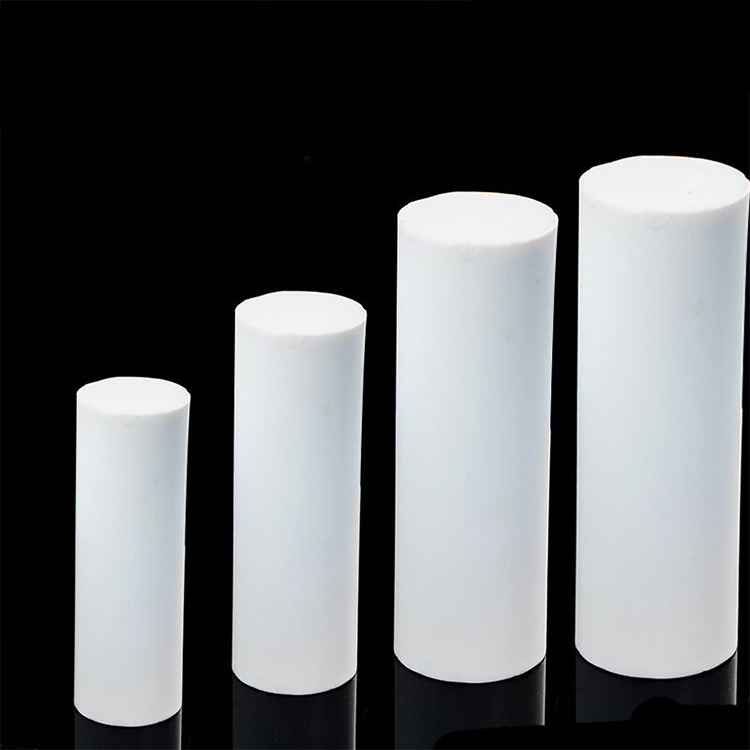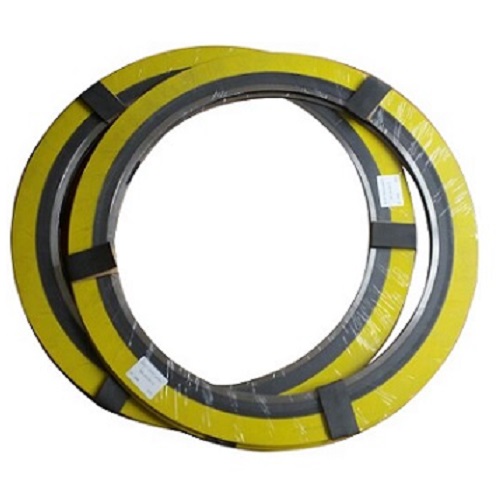

In the demanding environment of power plants, flange sealing is a mission-critical operation. High temperatures, pressure cycles, aggressive media, and strict safety regulations demand sealing solutions that go beyond ordinary gaskets. Expanded PTFE sheet and tape have emerged as the industry’s answer to persistent leakage and bolt relaxation issues, offering unmatched conformability and chemical resistance. Unlike traditional compressed fiber or rubber gaskets, expanded PTFE materials adapt to flange irregularities while maintaining a tight seal under extreme conditions.
But what truly makes expanded PTFE sheet and tape the preferred choice for power plant engineers? The answer lies in their unique microstructure: a node-fibril network created through a controlled expansion process. This structure grants exceptional flexibility, low creep relaxation, and the ability to seal even on damaged or warped flanges. For over a decade, Ningbo Kaxite Sealing Materials Co., Ltd. has engineered these advanced materials to meet the rigorous demands of steam, chemical, and cooling loops. Whether it's a high-pressure steam line or a corrosive acid transfer pipe, our expanded PTFE sheet and tape deliver reliability that power plants depend on. Below, we explore the technical parameters, practical benefits, and common questions surrounding this superior sealing technology.
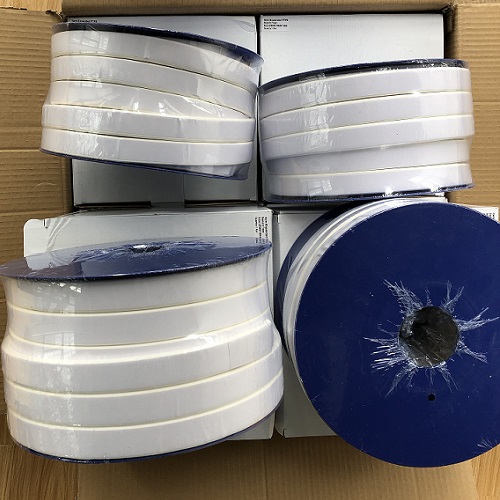
The performance of any gasket material is fundamentally determined by its internal structure. Expanded PTFE sheet and tape are produced through a process that stretches virgin PTFE resin under controlled heat and pressure, creating a unique network of nodes interconnected by tiny fibrils. This highly porous yet cohesive microstructure gives our material properties that conventional PTFE or rubber simply cannot match. At Ningbo Kaxite Sealing Materials Co., Ltd., we have perfected this expansion method to optimize sealing efficiency in power plant flanges.
Here is how the microstructure directly contributes to sealing success:
From our factory’s internal quality reports, expanded PTFE sheet and tape have a density ranging from 0.6 to 0.9 g/cm³, significantly lower than virgin PTFE (2.2 g/cm³). This low density is not a weakness but a deliberate engineering feature. It allows the material to deform elastically under bolt torque and recover when pressure is reduced. In power plants, where flanges undergo thermal expansion and contraction cycles, this property prevents leakage that would otherwise occur due to gasket “set.” Our factory has supplied expanded PTFE sheet and tape to coal-fired, nuclear, and gas turbine plants, and in every case, the microstructure proved to be the key to zero-leakage performance.
Additionally, the closed-cell structure of expanded PTFE prevents wicking of liquids. Even if the flange face has a minor defect, the gasket will not absorb corrosive chemicals, which could lead to degradation. For power plant operators, this means reduced maintenance frequency and lower total cost of ownership. Our data shows that by switching to expanded PTFE sheet and tape, plants have reduced unplanned downtime by nearly 40% due to flange leak repairs.
Power plants operate across a wide spectrum of temperatures and pressures. From low-pressure cooling water lines at 40°C to superheated steam lines at 260°C, flange sealing materials must perform reliably without embrittlement or extrusion. Expanded PTFE sheet and tape offer an impressive service range that covers most power plant applications. At Kaxite, our engineering team has developed specific grades to handle extreme conditions while maintaining seal integrity.
Below is a detailed table of our standard expanded PTFE sheet and tape parameters. These values are derived from ASTM F36 and EN 13555 test methods performed in our factory.
| Property | Value / Range (Expanded PTFE Sheet and Tape) |
| Temperature Range (continuous) | -240°C to +260°C |
| Maximum Peak Temperature | 315°C (short term, no pressure) |
| Maximum Pressure (dynamic/cyclic) | Up to 83 bar (1200 psi) |
| Maximum Pressure (static) | Up to 103 bar (1500 psi) |
| Density Range | 0.6 – 0.9 g/cm³ (depending on grade) |
| Creep Relaxation (ASTM F38) | < 15% at 100°C, 1000h |
| Sealability (Nitrogen, ASTM F37) | < 0.1 mL/hr @ 50 bar |
| Fluid Compatibility | pH 0-14, all hydrocarbons, acids, alkalis, solvents |
For power plants, the combination of high temperature resistance and moderate-to-high pressure rating is critical. In a typical combined-cycle plant, steam turbine flanges experience rapid temperature changes during start-up and shutdown. Our expanded PTFE sheet and tape accommodate flange movement without relaxation. Our factory records from a 500 MW coal plant show that after 3 years of service on a 2.5 MPa steam flange, there was zero visible leakage and gasket thickness remained within 95% of original.
Moreover, the performance across such a wide temperature range without hardening or cracking is rare among non-asbestos gaskets. Unlike elastomeric seals that degrade above 150°C, expanded PTFE remains flexible at cryogenic temperatures as well, which is particularly important for LNG auxiliary systems or air separation units in power plants. With our factory’s rigorous batch testing, we ensure that every roll of expanded PTFE sheet and tape meets these ratings, giving plant engineers confidence in long-term operation.
Power plants handle an aggressive cocktail of fluids and gases: de-mineralized water, sulfuric acid for pH control, sodium hypochlorite for cooling tower treatment, ammonia for NOx reduction, and many hydrocarbons. Many sealing materials fail because chemical attack causes swelling, dissolution, or embrittlement. Expanded PTFE, being chemically inert, resists virtually all industrial chemicals except molten alkali metals and elemental fluorine at high temperatures. This unique advantage makes expanded PTFE sheet and tape the safest choice for power plant flange sealing.
Here is a breakdown of how chemical resistance directly translates to operational benefits in different power plant zones:
From our factory’s application database, one of the most challenging environments is the FGD bypass damper flange. The gas contains hydrogen chloride, sulfur dioxide, and fly ash at 150-180°C. Traditional PTFE envelope gaskets failed due to envelope rupture. In contrast, solid expanded PTFE sheet and tape from Ningbo Kaxite Sealing Materials Co., Ltd. have achieved service lives exceeding 5 years without replacement. Because our factory uses 100% virgin PTFE resin expanded with no fillers or binders, there is no risk of binder extraction or chemical attack on filler particles.
Our factory also performs immersion tests following ASTM D543. For expanded PTFE sheet and tape, the weight change in 30% sulfuric acid at 90°C for 7 days is less than 0.1%. For comparison, some “PTFE” composite gaskets containing silica or barium sulfate show weight losses over 5% under the same conditions, leading to internal voids and leaks. This is why we manufacture only pure expanded PTFE sheet and tape at Kaxite, ensuring the highest chemical resilience. Plant maintenance managers can therefore standardize on one gasket material for 95% of their flange connections, simplifying inventory and reducing misapplication risks.
Bolt torque relaxation is one of the leading causes of flange leakage in power plants. After initial tightening, gasket creep, thermal cycling, and vibration cause the bolt stress to drop, resulting in a loss of sealing pressure. Expanded PTFE sheet and tape combat this problem through excellent compressibility and high recovery. Unlike hard gaskets (e.g., spiral wound or kammprofile) that require extremely flat flanges, or soft rubber that suffers high creep, expanded PTFE achieves a balance that maintains gasket stress over time.
Consider the following features that our factory builds into every expanded PTFE sheet and tape:
The mechanism behind this impressive behavior is again the node-fibril microstructure. Under bolt load, the fibrils bend and nodes compress, but they do not fracture. When load reduces, the stored elastic energy pushes back. In contrast, traditional compressed non-asbestos fiber (CNAF) gaskets contain inorganic fillers that undergo plastic deformation, leading to permanent thickness loss and torque decay. Our factory conducted a side-by-side test: after 500 thermal cycles from 30°C to 230°C on a DN150 flange, expanded PTFE required no retorquing, while CNAF needed three retorque operations and still showed minor weeping.
For power plant operators, this translates into dramatic reductions in maintenance workload. Our factory recommends using expanded PTFE sheet and tape with a gasket stress of 25-30 MPa, which is achievable with standard torque wrenches. Because the material is so forgiving, even slightly uneven bolt tightening does not lead to immediate leakage. This reliability is why Ningbo Kaxite Sealing Materials Co., Ltd. has become a trusted partner for power generation facilities across Southeast Asia and the Middle East. We have documented cases where a single replacement of conventional gaskets with expanded PTFE sheet and tape eliminated leakage for over four years, saving thousands in lost production.
Installation efficiency and correctness directly impact plant uptime. Traditional gaskets often require precise cutting, special handling, and sometimes adhesives to stay in place. Expanded PTFE sheet and tape from Ningbo Kaxite Sealing Materials Co., Ltd. bring multiple installation advantages that reduce human error and speed up flange assembly. Our factory has developed user-friendly formats: sheets for cutting custom gaskets, and self-adhesive tape for quick sealing of odd-shaped or large-diameter flanges.
Here are the key installation benefits that power plant maintenance teams appreciate:
From our factory’s training documents, one common mistake with rigid gaskets is overtightening, which damages the flange or cracks the gasket. Expanded PTFE sheet and tape have a wide effective stress window: from as low as 15 MPa to as high as 40 MPa, the sealing performance remains excellent. This feature is particularly valuable in aging power plants where flange condition is not perfect. Another time-saving factor: there is no need for gasket compression stops or complex torque patterns. Our factory recommends a simple cross-torque pattern to 25 MPa, and the material handles the rest.
Additionally, because expanded PTFE does not stick to flange surfaces, disassembly for inspection is much easier. No scraping or grinding is required, preserving flange face integrity. This means that when maintenance is needed, our expanded PTFE sheet and tape can be removed cleanly, and a new gasket can be installed without flange refurbishment. For power plants aiming to reduce turnaround time during outages, this is a significant benefit. In one of our customer’s gas-fired plants, the use of expanded PTFE sheet and tape reduced the average flange repair time from 4 hours to 1.5 hours per flange, leading to a 60% reduction in labor cost for gasket replacements.
Expanded PTFE sheet and tape are not just another gasket material; they are an engineered solution to the persistent sealing challenges faced by power plants. From their unique node-fibril microstructure to superior chemical resistance, temperature stability, torque retention, and installation ease, these materials have proven their worth across thousands of flange connections. At Ningbo Kaxite Sealing Materials Co., Ltd., we have dedicated our factory to producing the highest quality expanded PTFE sheet and tape using advanced manufacturing lines and ISO 9001:2015 certified processes. Our factory’s commitment to testing every batch ensures that our customers receive consistent, reliable products that meet or exceed industry standards like ASME B16.21 and EN 1514-7.
If you are tired of frequent retorquing, chemical degradation, or leakage that disrupts your plant’s operation, it is time to upgrade to expanded PTFE sheet and tape. Contact Ningbo Kaxite Sealing Materials Co., Ltd. today to request a sample or technical consultation. Our factory team will help you select the right grade and thickness for your specific flange parameters. Let us help you achieve zero-leakage flange connections that keep your power plant running safely and efficiently.
Ready to improve your flange sealing reliability? Reach out to Ningbo Kaxite Sealing Materials Co., Ltd. for a free application analysis and product samples. Our engineers are ready to support your next outage or maintenance project.
Expanded PTFE sheet and tape from Ningbo Kaxite Sealing Materials Co., Ltd. are rated for continuous operation from -240°C to +260°C. For short-term upsets (less than 1 hour), temperatures up to 315°C are acceptable, provided there is no internal pressure. This range covers superheated steam, thermal oil, and exhaust gas applications in most power plants. Our factory verifies thermal stability through thermogravimetric analysis, ensuring no decomposition or weight loss below 300°C.
Yes, one of the primary advantages of expanded PTFE tape is its ability to seal on flanges with pitting, scratches, or radial grooves up to 0.5 mm deep. The material’s high compressibility (over 45%) allows it to flow into surface irregularities without requiring a liquid sealant. However, for pits deeper than 0.8 mm, our factory recommends either a thicker grade (3 mm or more) or flange reconditioning. In practice, many power plants have successfully used our expanded PTFE tape on flanges that were previously condemned, saving expensive replacement costs.
Expanded PTFE sheet is made entirely from 100% pure PTFE resin, just like PTFE envelopes. However, envelope gaskets consist of a PTFE jacket over a compressed filler core. If the envelope tears, corrosive media attack the filler, leading to rapid failure. In contrast, solid expanded PTFE sheet and tape have no filler, so even if the surface is scratched, the entire gasket remains chemically resistant. Our factory has documented cases in FGD service where envelope gaskets failed within 6 months while expanded PTFE sheet and tape lasted over 5 years.
Generally, no retorquing is required when using high-quality expanded PTFE sheet and tape, thanks to their low creep relaxation and high recovery. However, for initial installations on large-diameter flanges (DN400 and above) or for superheated steam above 200°C, our factory recommends a single hot retorque after 24 hours of operation to account for any thermal settling. For most power plant applications, maintenance records show that proper initial torque at 25-30 MPa is sufficient for lifetime sealing, eliminating the need for regular retorquing.
Yes, expanded PTFE materials are widely used in nuclear power plants for secondary circuit flanges, since they contain no halogens other than fluorine in a stable polymer form, and they produce no corrosive off-gassing under radiation. Ningbo Kaxite Sealing Materials Co., Ltd. can supply expanded PTFE sheet and tape with full material traceability and test reports per RCC-M or ASME Section III requirements. Our factory has previously supplied to nuclear auxiliary systems, and all products meet the low leachable chloride and fluoride limits specified for nuclear safety.