
Industrial plants operate under extreme temperature fluctuations, aggressive chemicals, high pressure loads, and continuous vibration. In such demanding environments, even minor sealing failures can lead to costly downtime, environmental hazards, and safety incidents. The question How Do Spiral Wound Gaskets Reduce Leakage Risks in Industrial Plants is therefore not theoretical. It directly impacts operational reliability, compliance, and long term profitability.
Spiral Wound Gaskets are engineered to maintain sealing integrity in the most critical pipeline and flange connections. By combining metallic strength with soft filler resilience, they compensate for flange irregularities, thermal expansion, and pressure cycling. Ningbo Kaxite Sealing Materials Co., Ltd. has focused on advanced sealing technologies for decades, and our experience confirms that proper gasket design, material selection, and manufacturing precision significantly reduce leakage risks in refineries, petrochemical plants, power stations, and offshore facilities.
1. What Structural Features Make Spiral Wound Gaskets Resistant to Leakage?
2. How Do Material Selections Influence Sealing Performance in Industrial Plants?
3. Why Do Installation Accuracy and Load Distribution Determine Long Term Sealing Reliability?
4. Conclusion
5. FAQ
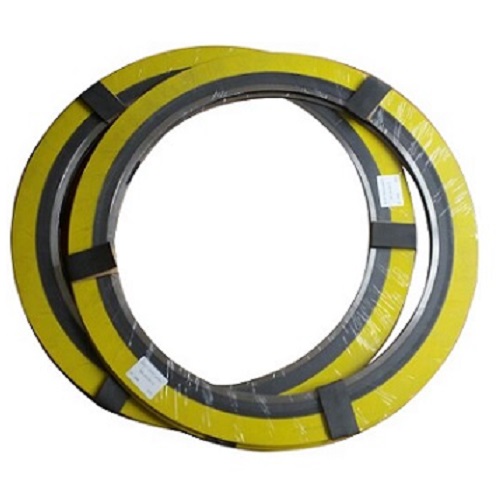
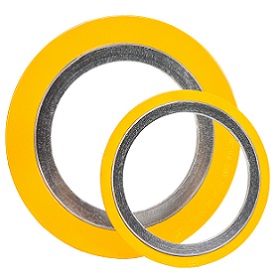
To understand How Do Spiral Wound Gaskets Reduce Leakage Risks in Industrial Plants, it is essential to examine their structural engineering. Unlike traditional sheet gaskets, Spiral Wound Gaskets are constructed by winding a preformed metal strip and soft filler material together in a spiral configuration. This design provides elasticity, strength, and recovery capability under varying operating conditions.
The core structure consists of V shaped metal windings alternated with compressible filler. The metallic strip provides mechanical strength and blowout resistance, while the filler ensures tight sealing against flange surfaces. This combination allows the gasket to:
At Ningbo Kaxite Sealing Materials Co., Ltd., our factory carefully controls winding density and tension to ensure uniform compression performance across the entire sealing surface.
Industrial systems frequently experience temperature and pressure fluctuations. A rigid gasket may lose contact when components expand or contract. Spiral Wound Gaskets, however, offer superior elastic recovery. The spring like metal windings absorb mechanical movement while maintaining sealing stress. Our production process ensures that each gasket maintains stable compression characteristics even under extreme cycling conditions. This dynamic response is one of the main reasons Why Do Spiral Wound Gaskets Reduce Leakage Risks in Industrial Plants.
Depending on application requirements, gaskets may include:
These reinforcement rings enhance blowout resistance and prevent damage caused by turbulent media. Our engineers at Kaxite Sealing recommend inner ring types for high pressure and high velocity applications such as steam lines and hydrocarbon processing units.
| Parameter | Specification Range |
| Standard Sizes | DN10 to DN3000 |
| Pressure Rating | Class 150 to Class 2500 |
| Operating Temperature | Minus 200 C to 1000 C depending on materials |
| Metal Materials | SS304, SS316L, SS321, Carbon Steel, Inconel |
| Filler Materials | Flexible Graphite, PTFE, Mica |
| Applicable Standards | ASME B16.20, EN 1514, API 601 |
Our strict dimensional control ensures precise fit with ANSI, DIN, and JIS flanges. Kaxite Sealing applies advanced CNC forming and inspection equipment in our factory to maintain consistent product quality.
Material compatibility is central to answering How Do Spiral Wound Gaskets Reduce Leakage Risks in Industrial Plants. Incorrect material selection can cause corrosion, degradation, and sealing failure. Proper pairing of metal and filler materials ensures long term stability under aggressive operating environments.
The metal winding provides structural support and resistance to internal pressure. Selection criteria include:
For chemical plants handling acids, SS316L is often recommended. For high temperature applications, SS321 or Inconel may be preferred. Our technical team at Ningbo Kaxite Sealing Materials Co., Ltd. conducts material matching analysis to reduce galvanic corrosion risks.
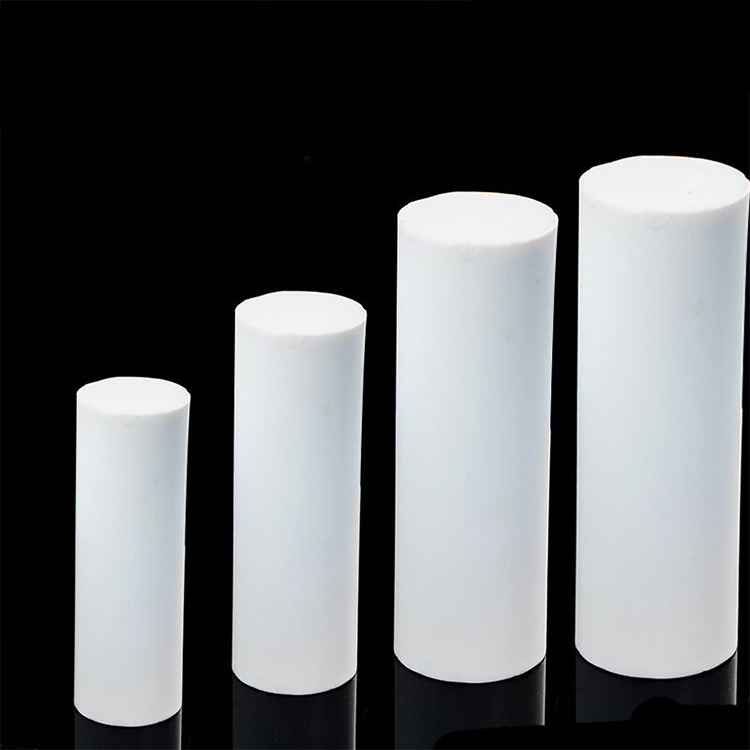
Flexible graphite remains the most widely used filler due to its thermal stability and chemical resistance. PTFE is ideal for strong chemical environments with lower temperature ranges. Mica fillers are selected for extreme high temperature sealing. Our Spiral Wound Gaskets use high purity graphite with controlled density to ensure minimal leakage rates. Our factory performs compression and recovery tests to verify long term stability.
| Application | Recommended Metal | Recommended Filler | Temperature Range |
| Steam Systems | SS304 or SS316L | Graphite | Up to 550 C |
| Petrochemical Hydrocarbons | SS316L | Graphite | Up to 450 C |
| Strong Acids | SS316L | PTFE | Up to 260 C |
| High Temperature Exhaust | SS321 or Inconel | Mica | Up to 1000 C |
Ningbo Kaxite Sealing Materials Co., Ltd. maintains strict raw material inspection protocols. Our factory ensures traceability from raw material batch to finished product. This controlled process directly supports leakage prevention in high risk industrial operations.
Even the highest quality Spiral Wound Gaskets require proper installation to achieve optimal sealing. Understanding bolt load distribution and flange preparation explains further How Do Spiral Wound Gaskets Reduce Leakage Risks in Industrial Plants.
Improper tightening leads to uneven compression, which creates leak paths. Our technical guidance documents help maintenance teams achieve consistent gasket compression.
At Ningbo Kaxite Sealing Materials Co., Ltd., our engineers provide detailed installation manuals to minimize field errors. Our factory also offers customized sizing solutions for non standard flanges.
Leakage risk reduction does not end at installation. Periodic bolt re torque checks, vibration monitoring, and thermal expansion evaluation extend service life. Spiral Wound Gaskets perform reliably when maintenance protocols are followed. By integrating structural engineering, material science, and installation best practices, Ningbo Kaxite Sealing Materials Co., Ltd. ensures our products meet demanding industrial safety standards. Our commitment to quality manufacturing enables consistent performance across global industrial markets.
How Do Spiral Wound Gaskets Reduce Leakage Risks in Industrial Plants can be clearly answered through structural resilience, material optimization, and controlled installation practices. Their layered design offers flexibility and strength, material combinations provide chemical compatibility, and proper bolt load management ensures uniform compression. Spiral Wound Gaskets are a proven solution for high pressure and high temperature sealing applications.
Ningbo Kaxite Sealing Materials Co., Ltd. combines advanced manufacturing, strict quality inspection, and engineering expertise to deliver reliable sealing solutions. Our team supports clients with material selection, customization, and technical consultation. Contact us today to discuss your project requirements and receive professional recommendations tailored to your industrial application.
They combine elastic metal windings with compressible filler materials, allowing the gasket to expand and contract with temperature changes while maintaining consistent sealing stress. This prevents gap formation during thermal cycling.
Unlike flat sheet gaskets, they offer superior recovery and pressure resistance due to their spiral construction. The metal reinforcement provides structural strength, while the filler maintains tight surface contact.
By selecting corrosion resistant metal alloys and chemically stable fillers such as PTFE or graphite, they maintain material integrity and prevent degradation that could lead to leakage.
Their reinforced design with inner and outer rings prevents blowout and inward buckling, ensuring that sealing stress is evenly distributed across the flange surface even under extreme pressure conditions.
Their compression recovery capability compensates for bolt relaxation and mechanical vibration over time, maintaining sealing integrity without frequent replacement.